Ben Uri Collection

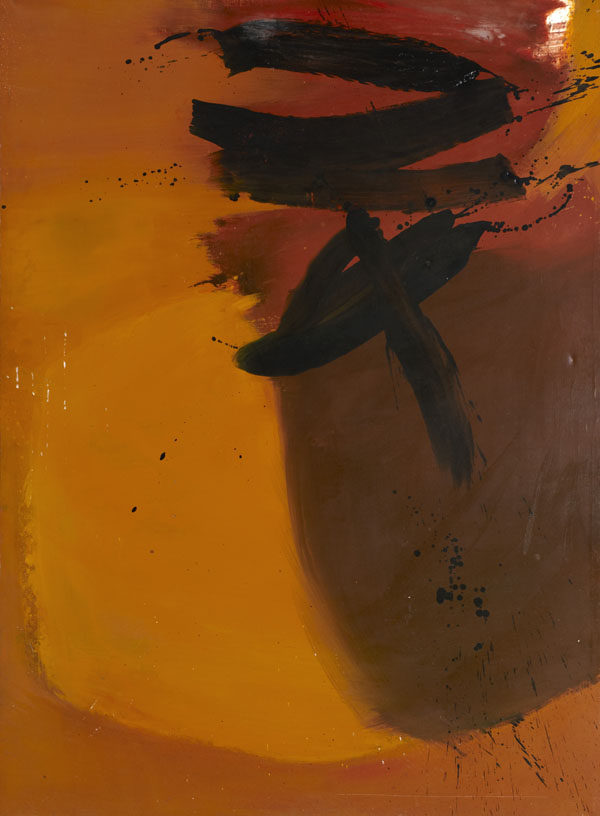
Acid Browns
Artist information
Other name Willy Tichauer
Born Stettin, Germany (Szczecin, Poland)
Died Leeds, England
Find more work in the collection by this artist
Find out more about this artist
Willy Tirr (né Tichauer) was born into a secular, Jewish family in Stettin, Germany, in 1915 and raised in Berlin. Following the rise of Nazism, he fled to England via Holland in June 1939, living in London before, following the introduction of internment in 1940, as a so-called 'enemy alien', he was sent to Australia aboard the infamous ship 'Dunera'. After his return to England in 1941 he joined the army, eventually serving in the Intelligence Corps, where he was part of an early unit which entered Bergen-Belsen concentration camp. Following his marriage in 1942, he changed his name to Tirr and moved to Leeds. Initially appointed (alongside Jacob Kramer), in 1957, to teach amateur evening classes at Leeds College of Art (absorbed into Leeds Polytechnic in 1962), he rose to become Head of Fine Art in 1968, a post he held until his retirement in 1980.
A self-taught painter, Tirr produced abstract paintings, inspired by both German Expressionism and the American Abstract Expressionist movement. He painted in a self-built studio adjoining his house, moving among an artistic circle which included Terry Frost, with whom he held a joint exhibition in York in 1957. Tirr had numerous solo exhibitions in locations including Wakefield (1957), Bradford (1963), Harrogate (1965), Leeds (1974 and 1988), Manchester (1981) and Yorkshire (1982), as well as in London at the New Vision Gallery (co-founded by Polish refugee art dealer Halima Nalecz with fellow artists Denis Bowen and Frank Avray Wilson) and at Ben Uri Gallery in 1965 (where he had first participated in a group exhibition in 1947). He also exhibited in group shows at galleries including the Drian (also founded by Nalecz, in 1957) and Grabowski galleries (founded by Polish refugee Mateusz Grabowski) in London and with the left-wing Artists' International Association (AIA). When, in 1984 he became artist-in-residence at the University of Wollongong, Australia, musician Edward Cowie observed of his work that 'Neither the tragedy of war, the passions of love and friendship, the tides of experience thrown up by the world journeyings or the ebb and flow of public taste in the arts has ever caused him to lose integrity or a richly spiritual personal identity'.
Willy Tirr died in Leeds, England in 1991. In 1992 a retrospective was held at Ben Uri in celebration of his memory, opened by a concert with violinist Ruth Waterman and pianist Peter Pettinger. A further posthumous exhibition was held at the Gascoigne Gallery, Ilkley in 2000. Tirr's work is held in UK collections, including the Ben Uri Collection, Leeds University, Laing Art Gallery, Newcastle, and Abbot Hall, Kendal (Lakeland Arts).
Object Details
Object type painting
Medium oil on canvas
Materials and techniques oil (medium) canvas (support)
Unframed 173 x 126 cm
Framed 174 x 127 cm
Acquisition presented by the artist
Accession number 1987-415
Display status not on display
Self-taught painter Willy Tirr’s bold abstracts reflect his knowledge of German Expressionism combined with the influence of the American Abstract Expressionists and the St Ives movement. Fellow émigré Norbert Lynton called him 'a natural expressionist [...] developing an idiom in which pools of colour are constrasted with more incisive brush strokes [...]. As his command increased,' he also noted, Tirr looked for correspondingly larger supports 'on which to perform his gestural act', as demonstrated by the size of this canvas. Tirr had learned Japanese during internment and a kinship to Japanese calligraphy is also notable in works such as 'Acid Browns'.
Selected exhibition history
1966
Fiftieth Anniversary Special Exhibition
Ben Uri Art Gallery
Literature
Oil Paintings in Public Ownership in Camden (London: The Public Catalogue Foundation, 2013) p. 41; Walter Schwab and Julia Weiner, eds., Jewish Artists: the Ben Uri Collection - Paintings, Drawings, Prints and Sculpture (London: Ben Uri Art Society in association with Lund Humphries Publishers Ltd, 1994), p. 103
Hover mouse cursor over image to zoom (you can also use the mouse wheel).