Ben Uri Pre-Eminent Collection

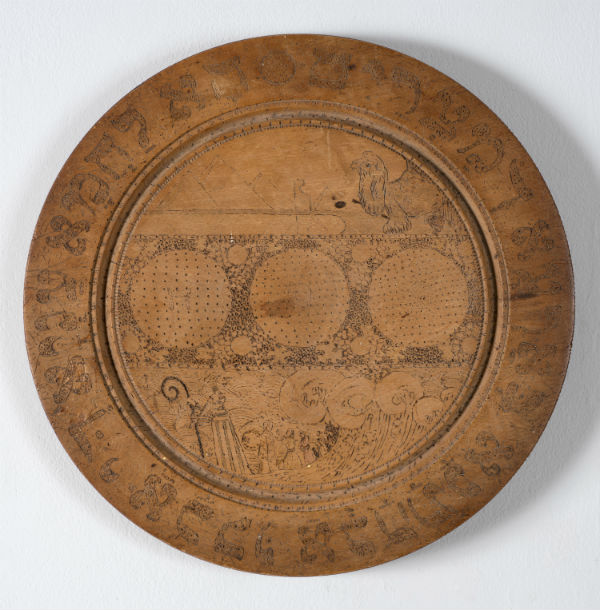
Circular Plate for Ben Uri for Pesach (Passover)
Artist information
Other name Lazare Berson, Elizer Berson, Eliezer Berson, Leon Berson
Born Skopichky, Russia (now Skapiškis, Lithuania)
Died Nice, France
Find more work in the collection by this artist
Find out more about this artist
Lazar Berson was born into a Jewish family in the village of Skopichky, Russia (now Skapiškis, Lithuania) on 16 October 1882. Little is known about his early life, although he probably spoke Yiddish at home and received a traditional Jewish religious education. At the turn of the century, he studied painting in St Petersburg, where he was influenced by the Jewish cultural renaissance and the renewed interest in Russian and Jewish folk art and craft. Berson took these ideas to Paris, where he continued his studies, probably as a student under Professor Cormon at the École des Beaux-Arts. Later, Berson described studying 'together with a prayer quorum of Jewish children', referring to the large number of mostly eastern-European Jewish émigré artists then working in Paris. Between 1911 and 1912 he exhibited at the Salon d’Automne alongside Marc Chagall, Léon Bakst, Moise Kisling and Jules Pascin, and lived at La Ruche (the beehive), at the same address as the sculptor Jacques Lipchitz. In contrast to other École de Paris artists who embraced modernist styles, Berson maintained the decorative approach to traditional folk art and sought to develop a specifically Jewish type of art.
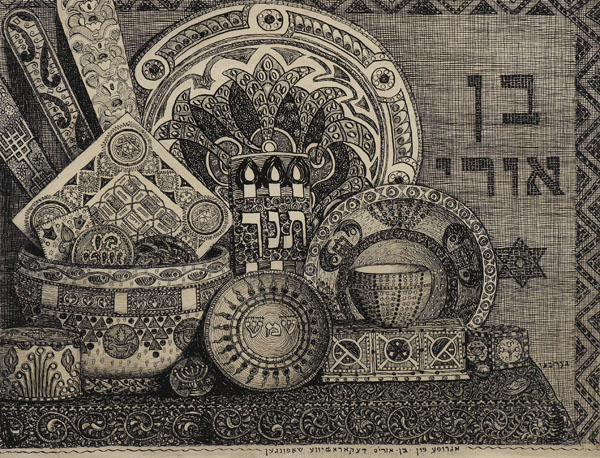
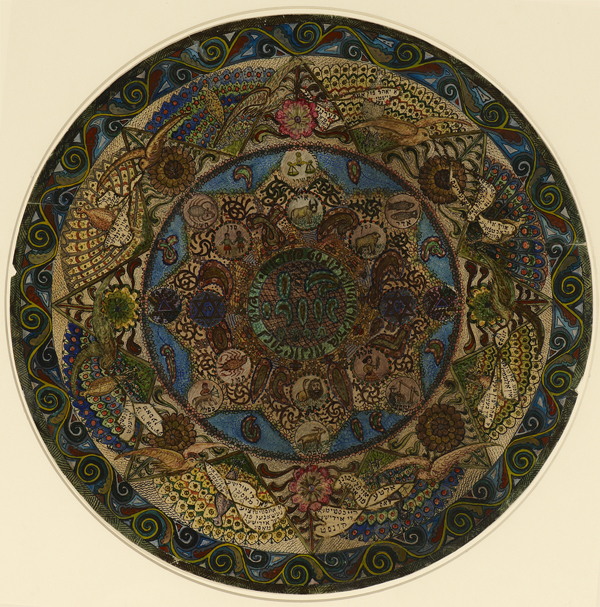
Following the outbreak of the First World War, Berson moved to London, where he set up a portrait studio and wrote articles for Jewish and Yiddish newspapers, espousing his uncompromising Jewish nationalist, Zionist and fierce anti-assimilationist views. In 1915, he realised his long-held ambition of forming a society for Jewish art when he founded 'The Jewish-National Decorative Art Association (London) Ben Ouri', in Whitechapel. This enabled him to develop his primary interest in decorative art, and the carving of wooden vessels, plates and boxes with motifs drawn from ancient illuminated manuscripts. In 'the Ben Uri studio' in West London, he brought together a number of East End artisans, who together with the jeweller Moshe Oved worked on a series of decorative 'Jewish' designs on wooden plates and bowls. In addition, Berson produced the Ben ouri albom, 'one of the world's first Yiddish art albums', printed in 1916 by the Ukrainian-born Hebraist Israel Narodiczky (1874–1942), as a fundraiser. By 1916, the Society had over 100 members and had organised many events and classes, but in September of that year, Berson left without warning for America, later returning to France. According to another of Ben Uri's founder members, Judah Beach, Berson was later detained by the Nazis in Nice and deported to Poland but survived the war and later resurfaced in Nice, where he continued to work as a painter until his death. Lazar Berson died in Nice, France on 27 July 1954. Ben Uri holds two copies of the Ben Uri Album (one hand-coloured), commissioned by Berson, as well as other decorative designs and a circular wooden plate for Pesach (Passover). The Jewish Museum London also holds a decorative plate by Berson, commissioned by Morris Myer, editor of the Yiddish daily newspaper Di Tsayt to commemorate a speech given by the Jewish writer Israel Zangwill in 1915.
Object Details
Date 1915
Object type plate
Medium wood
Materials and techniques wood (medium) carving (technique)
Unframed 29.5 x 29.5 x 1.5 cm
Signed Lazar Berson
Acquisition Presented by Annie Hayes 2019
Accession number 2019-28
Display status not on display
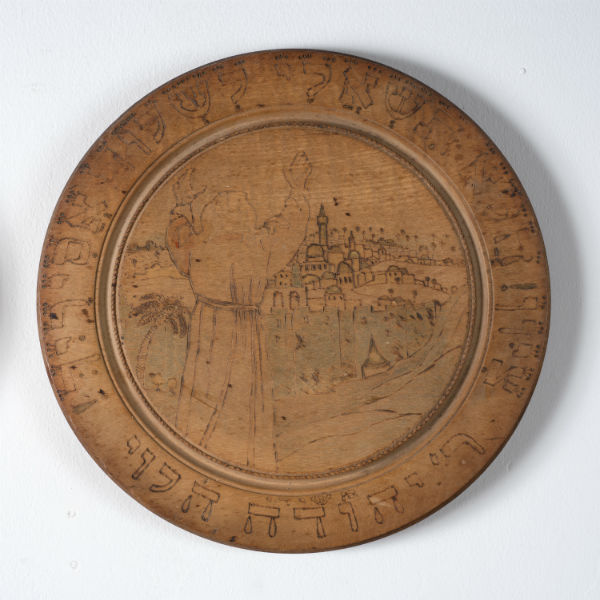
In 1915 Berson realised his long-held ambition of forming a society for Jewish art when he founded 'The Jewish-National Decorative Art Association (London) Ben Ouri', in Whitechapel. In 'the Ben Uri studio' in West London he brought together a number of East End artisans, who together with the jeweller Moshe Oved worked on a series of decorative 'Jewish' designs on wooden plates and bowls.
This unfinished plate (both in terms of the design and lack of colouring), signed by Berson, is for Pesach (Passover) and has been identified by David Mazower as typical of Berson’s trademark style of lettering, employing elaborate, curved shapes, with inner decoration, much like his plate dedicated to Israel Zangwill (Jewish Museum). The Hebrew lettering on this plate: ‘Ha lachma anya di achalu avatana b’ar’a d’mitzraim’, has the first line of “Ha Lakhma Anya”, the Aramaic poem in the Haggadah, translating as ‘This is the bread of affliction our ancestors ate in Egypt’.
Keywords
Ben Uri Arts Society | Ben Uri history | Hebrew | Jewish festival | Jewish Holiday | Judaism | Passover | Pesach | plate
Selected exhibition history
2020
New Acquisitions and Long-term Loans
Ben Uri Gallery
Hover mouse cursor over image to zoom (you can also use the mouse wheel).
Related works
Circular Plate for Ben Uri (Halevi)
by Ben Uri Studio
Design with Decorative Vessels from the Ben Uri Collection
by Lazar Berson
Circular Design for Ben Uri Art Society
by Lazar Berson