Ben Uri Collection

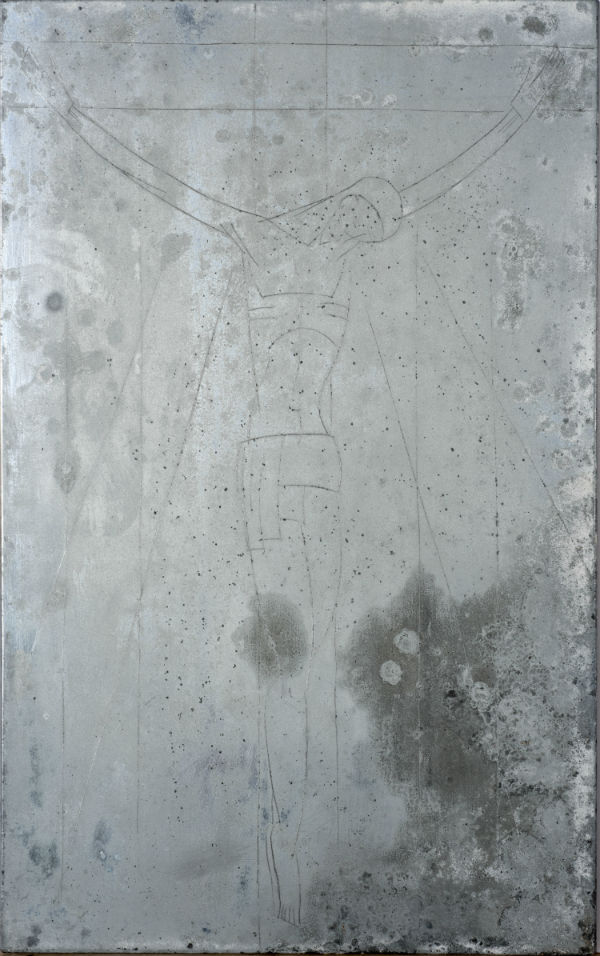
Christ on the Cross
Artist information
Name Arnold Auerbach (1898-1978)
Born Liverpool, England
Died London, England
Find more work in the collection by this artist
Find out more about this artist
Sculptor, painter and etcher Arnold Auerbach was born into a Jewish family in Liverpool, England on 2 April 1898. He trained at the Liverpool School of Art, as well as in Paris and in Switzerland. He exhibited regularly in London at the Royal Academy, as well as with the Goupil Gallery, and also with the Walker Art Gallery in Liverpool. In 1927 his work was included in the Exhibition of Jewish Art and Antiquities at the Whitechapel Art Gallery and in 1934 he participated in a group exhibition marking the opening of the 'Ben Uri Jewish Art Gallery and an Exhibition of Works by Jewish Artists', at Woburn House, subsequently exhibiting with Ben Uri in further group exhibitions in 1935, 1944 and 1956. Auerbach published a number of books on sculpture and his commissions include stylised panels for the Davis Theatre cinema in Croydon in 1928. During the 1920s Auerbach was commissioned as an architectural sculptor to decorate the interiors of a number of Art Deco buildings including the News Theatre, Shaftesbury Avenue (destroyed during the Second World War) and a series of reliefs for the Nawab of Rampur’s palace in India in 1927. His admiration of Ancient Egyptian sculpture was also reflected in the simplicity and monumentality of his forms. He took up etching in the early 1920s during a noted boom in this practice and continued to produce plates intermittently throughout this decade into the early 1930s. The images often relate to his drawings, paintings or sculpture and include London and Liverpool street scenes and studies of heads and figures. The earliest plates are tonal and often in drypoint, worked directly into the plate without the use of ground or acid.
During the Second World War Auerbach took up his first teaching post, at Beckenham School of Art in Kent, and afterwards joined the staff of the Regent Street Polytechnic in London, initially in the School of Architecture and later, in the School of Art, where he taught still life and portrait painting, before moving finally to the Chelsea School of Art, where he remained until his retirement in 1964; he continued to teach at the Stanhope Institute until 1968. Ill health forced him to give up sculpture in the mid-1950s for painting. He died in London, England on 12 September 1978. His work is in UK collections including the Ben Uri Collection; New College, Oxford; Tate and the V&A.
Object Details
Date c. 1920 (restrike 1999)
Object type mixed media
Medium zinc etching plate
Unframed 30.5 x 19 cm
Acquisition presented by Drew Wilson 2018
Accession number 2018-09i
Display status not on display
During the 1920s Auerbach was commissioned as an architectural sculptor to decorate the interiors of a number of Art Deco buildings including the News Theatre, Shaftesbury Avenue (destroyed during the Second World War) and a series of reliefs for the Nawab of Rampur’s palace in India in 1927. His admiration of Ancient Egyptian sculpture was also reflected in the simplicity and monumentality of his forms.
He took up etching in the early 1920s during a noted boom in this practice and continued to produce plates intermittently throughout this decade into the early 1930s. The images often relate to his drawings, paintings or sculpture and include London and Liverpool street scenes and studies of heads and figures. The earliest plates are tonal and often in drypoint, worked directly into the plate without the use of ground or acid. The stylised, slender figure of his Christ is reminiscent of the work of Eric Gill, who carved over 50 crucifixions in the course of his career.
Hover mouse cursor over image to zoom (you can also use the mouse wheel).
Related works
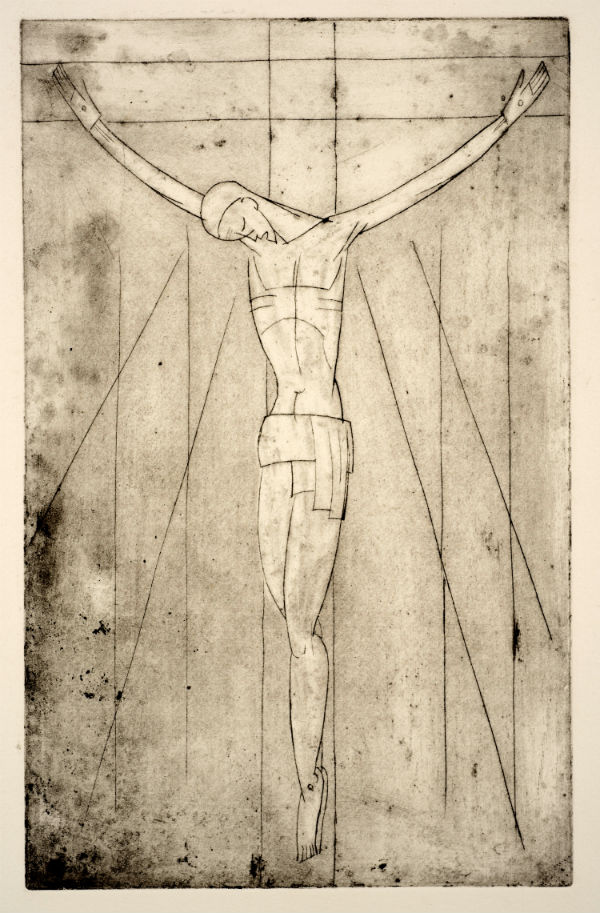
Christ on the Cross
by Arnold Auerbach

Homesh Evacuation #01 / Taken Down
by Natan Dvir
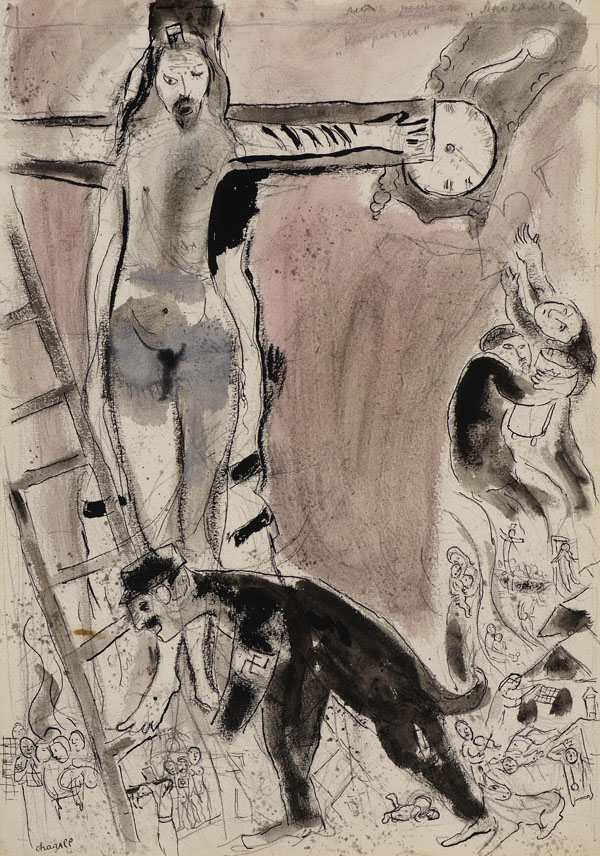
Apocalypse en Lilas, Capriccio
by Marc Chagall
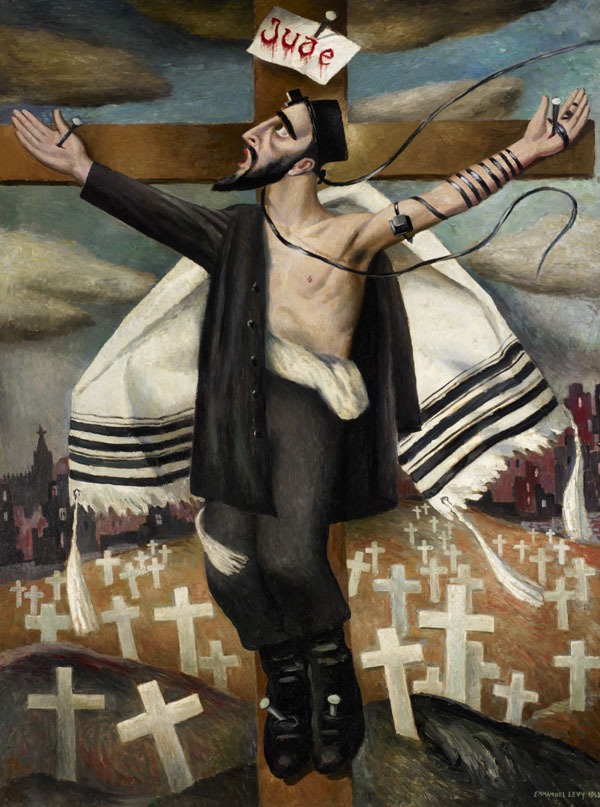
Crucifixion
by Emmanuel Levy