Ben Uri collection
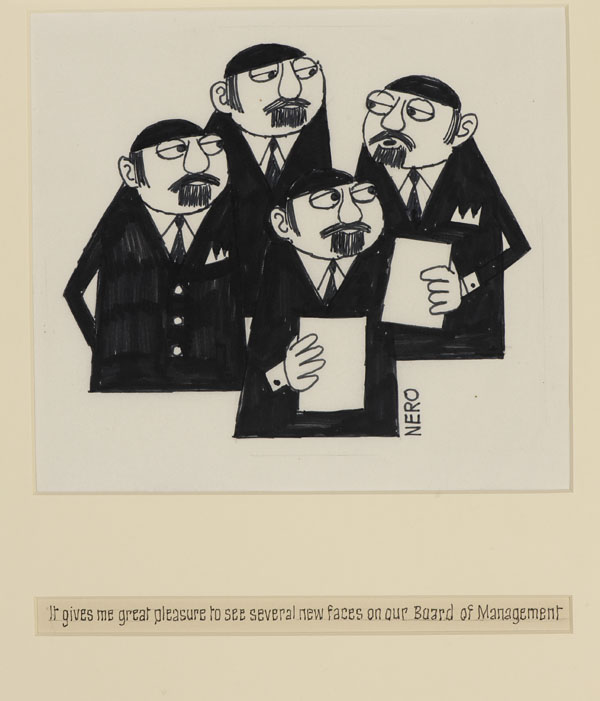
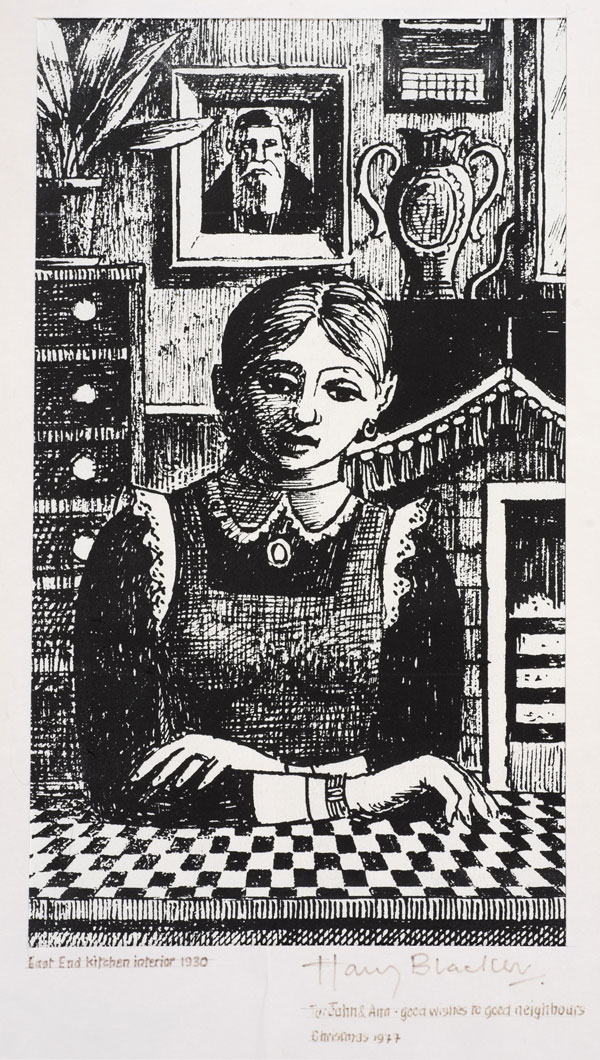
Work by Harry Blacker (Nero)
Biography
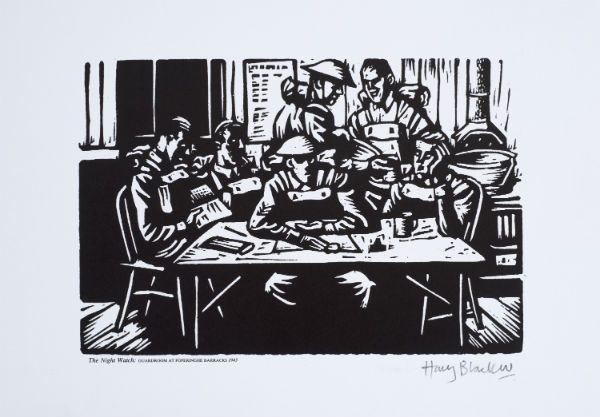
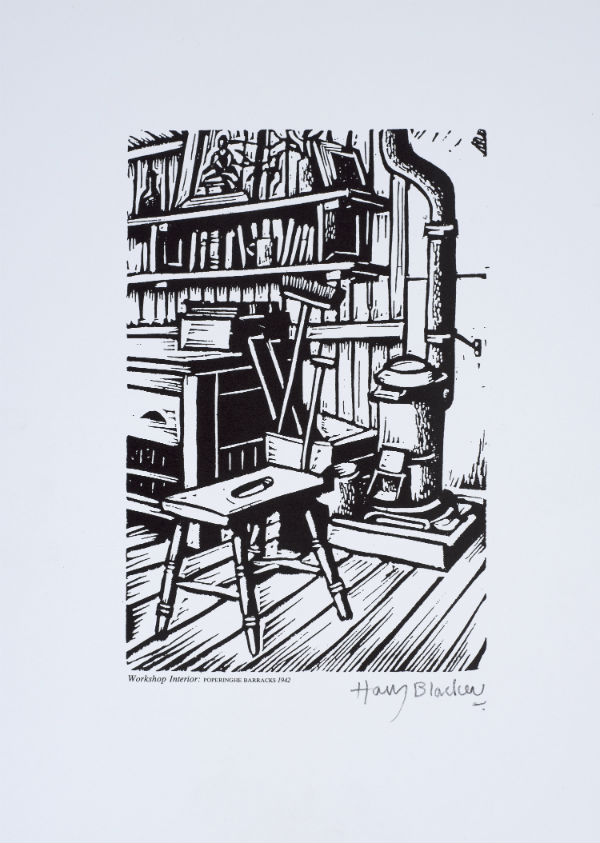
Harry Blacker, known professionally as 'Nero', was born to Russian-Jewish immigrant parents in Whitechapel, London, England on 1 May 1910 and grew up in the East End. After leaving school at the age of fourteen, he spent five years as an apprentice learning printing and engraving and attended evening class at the Sir John Cass School of Art in Aldgate East. Blacker's first freelance commissions were for the Radio Times and Fleet Street newspapers, and he went on to design posters for Shell-Mex, BP, London Transport, and the Post Office, becoming known as the "Giles" of Anglo-Jewry, after the renowned Daily Express cartoonist. He contributed cartoons to publications including Punch, Liliput, the Jewish Chronicle, the Daily Express and The Stage, among others, presenting the 'unique identity of a community torn between tradition and assimilation, between spiritual ascent and the more social variety' in a distinctive visual form (David Cohen, Harry Blacker obituary, The Independent, 22 October 2011). He also painted theatre scenery, and assisted Edward Bainbridge Copnall in the carving of 15ft high bas-reliefs on the RIBA building in Portland Place, London. In 1932 Blacker exhibited his sculpture and illustrations at the Whitechapel Art Gallery, before joining clothing store, Simpson of Piccadilly's advertising department, where he worked with Bauhaus founder, Hungarian émigré, László Moholy-Nagy, who became a close friend and photographed him. Blacker later worked as a creative designer for a Mayfair advertising agency. He participated in the East End Academy exhibitions held at the Whitechapel in 1934 and 1939, the Jewish Chronicle noting that his ‘little pen and ink sketches [...] are finely compressed. More is concentrated into these few deeply felt and finely wrought square inches than in many square yards of lavishly painted canvas’ (S. 1934, p. 20). During the Second World War Blacker served in the Royal Artillery, also editing and illustrating the camp newspaper, and made woodcuts reflecting the life of Poperinghe Barracks, in Arborfield, Berkshire.
Postwar Blacker was an active member of the Ben Uri Arts Committee and had a solo exhibition at Ben Uri in Dean Street, Soho, in 1971 under his professional name, 'Nero' (‘black' in Italian), entitled ‘Some of my Best Jokes are Jewish - a new collection of cartoons’; followed by 'New Cartoons' in 1973; he also participated in the ‘Cartoon and Caricature Exhibition' in 1975. He also painted landscapes in watercolour and pastel and had a major exhibition at the Whitechapel Art Gallery in 1980. He published two books about his reminscences of the East End, 'Just Like It Was: memoirs of the Mittel East' (1974) and 'East Endings' (1989). The latter was accompanied by a book launch at Ben Uri and was also the title of a 1993 Mark Jay documentary about the artist, who was filmed surrounded by old friends in one of the last remaining kosher cafes in the East End. A Harry Blacker Retrospective was held at Ben Uri Gallery in 1986. He died in London, England on 27 June 1999. Posthumously his work has been included in exhibitions including 'Jewish Cartoonists and Political Caricaturists' at Ben Uri Gallery (2001) and 'A 20th Century Jewish Experience' at the Sternberg Centre for Judaism (2003). His work is held in UK collections including the Ben Uri Collection, the Borough of Tower Hamlets, the Jewish Museum, and The London Transport Museum. His archive is held at the University of Southampton.
Search Ben Uri archive for more information about Harry Blacker (Nero)
Artist keywords
Ben Uri Arts Committee | Ben Uri member | cartoonist | East End | second generation immigrant | Sir John Cass School of Art
6 work/s by this artist from the collection are shown below. For a more detailed record and image please click on the link.